Gå vidare till
Inside an ambulance, a male healthcare worker uses a stethoscope to examine a patient's chest, assisted by two female healthcare workers in uniform holding medical equipment. Inside an ambulance, a male healthcare worker uses a stethoscope to examine a patient's chest, assisted by two female healthcare workers in uniform holding medical equipment.

Buy One, Gift One

Making a difference 

Well-trained healthcare providers save lives. Yet in many parts of the world, providers still lack access to the high-quality, hands-on training they need to deliver safe care. From delivery rooms to emergency departments, we are working to bridge that gap, by helping healthcare teams build the skills and confidence to act when every second counts. 


How it works 

Buy One Gift One (BOGO) is a joint initiative between Laerdal Medical and Laerdal Global Health that expands access to simulation-based training in countries with the highest mortality.

For every maternal simulator or Emergency Care Learning Lab purchased through Laerdal Medical for use in a high-income country, another is donated through the customer's purchase and strategically distributed by Laerdal Global Health to a local partner or organization. 

Together, these purchases help equip healthcare workers with lifesaving training tools, improving care for childbirth and other time-critical emergencies in places where it’s needed most. 

A smiling woman lying on a clinic bed with a MamaNatalie maternal simulator during a hands-on simulation training session.

Maternal and newborn

Maternal and Newborn

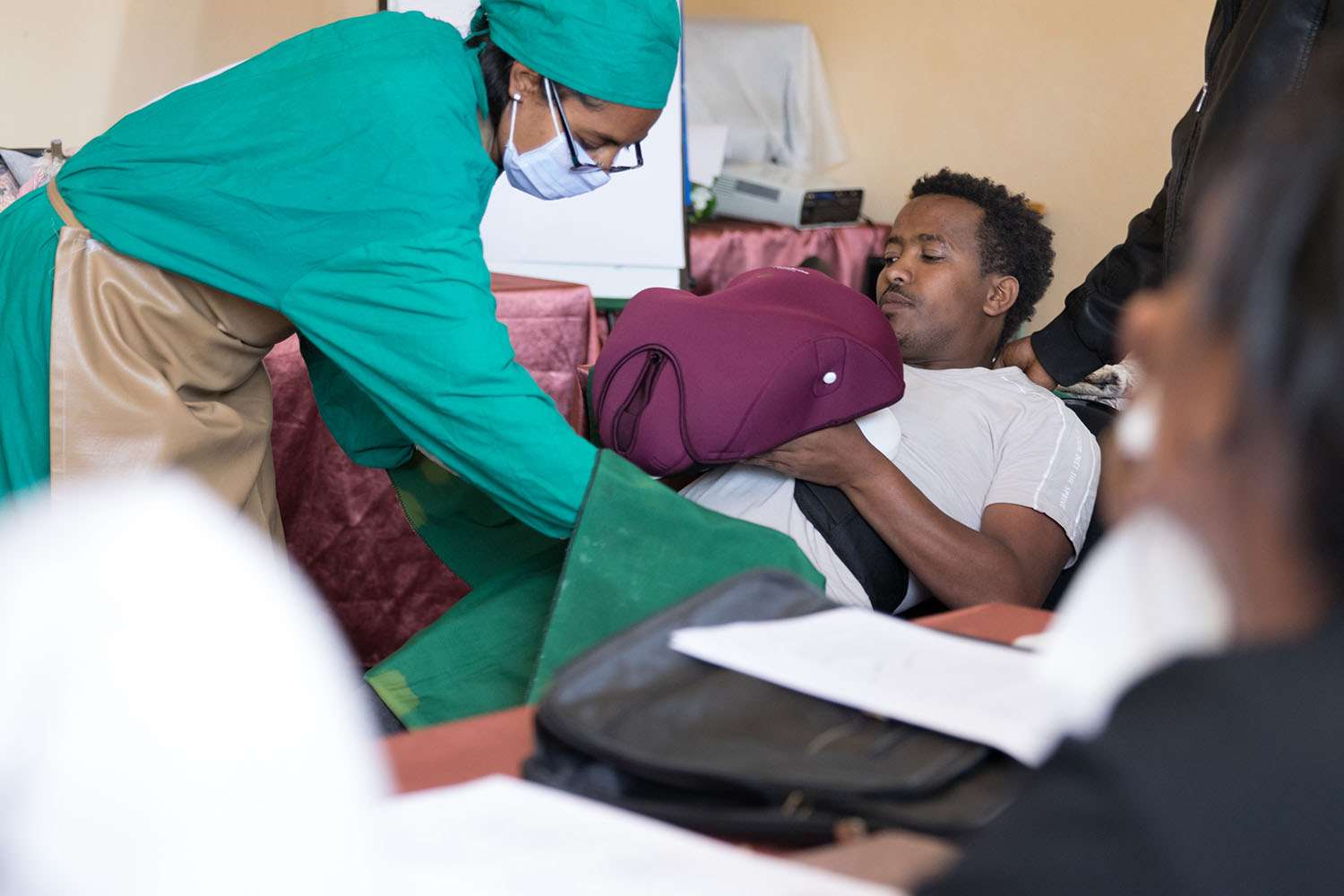
See how our Buy One, Gift One program is putting life-saving training tools into the hands of midwives and healthcare providers. From normal deliveries to emergency births, the BOGO program is helping providers build the confidence they need to save lives of the most vulnerable mothers and babies.

Läs mer

Basic Emergency Care

Basic Emergency Care

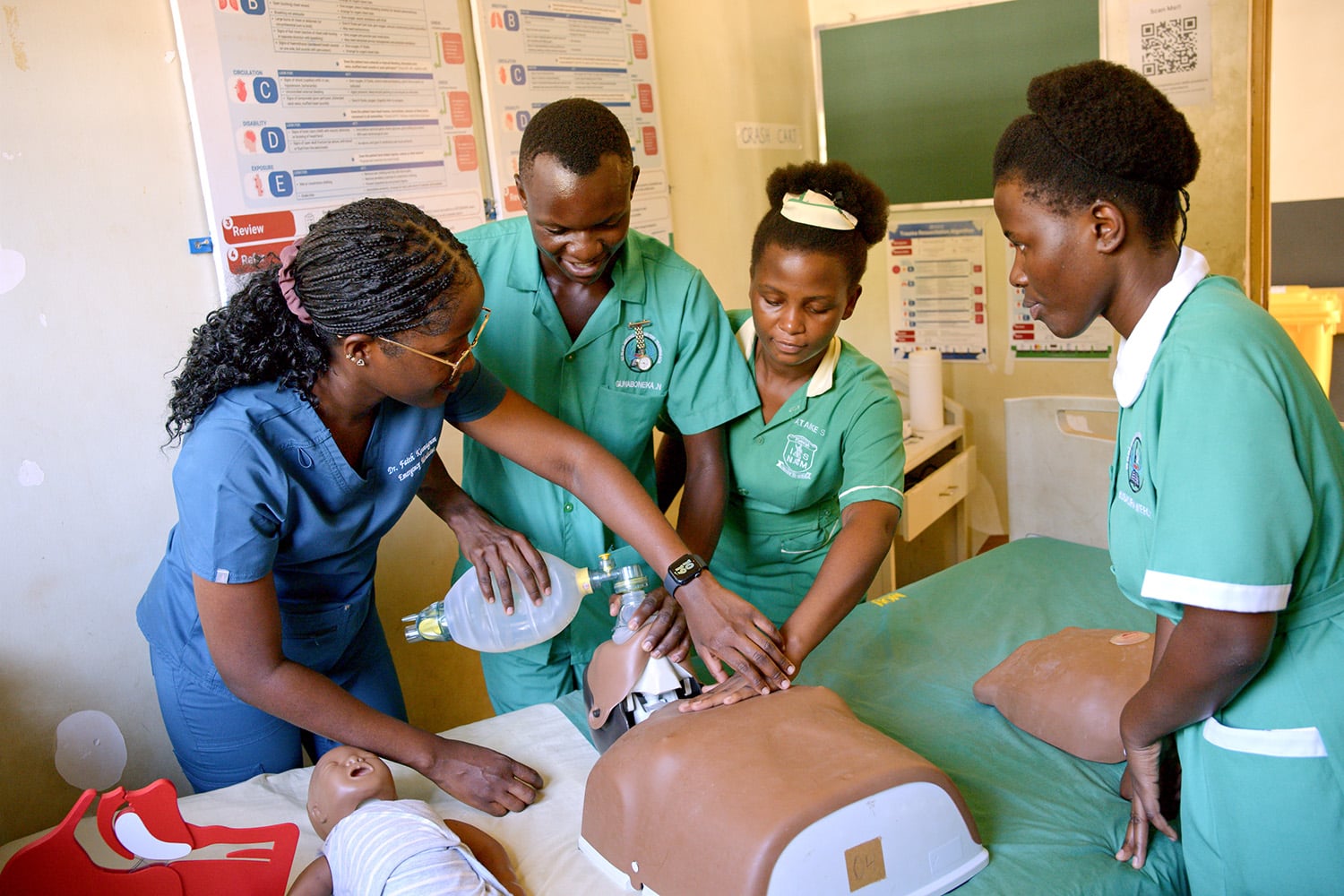
When a medical emergency occurs, every second counts. Discover how the Buy One, Gift One program is providing vital training tools to empower healthcare providers with the hands-on skills to handle time-critical emergencies and save lives every day.

Läs mer

Frequently asked questions


How are the simulators allocated?

Through Buy One, Gift One, every donated simulators is placed into a shared donation pool managed by Laerdal Global Health. From there, kits are allocated strategically to selected partners, countries, and training programs where they can support long-term impact. This ensures donations are used where they are most needed and where they can help catalyze further scale-up.

The purpose of Buy One, Gift One is not only to donate equipment, but to help strengthen training systems. Managing donations through a shared pool allows Laerdal Global Health to coordinate allocations as part of structured training programs. It considers factors such as national readiness, training capacity, local ownership, and logistics, rather than sending individual kits one by one without a broader implementation plan.

How are allocation decisions made?

Allocations are prioritized based on six main criteria:

  1. High need:
    Priority is given to countries and settings with a high burden of time-critical emergencies and limited access to practical Training.
  2. Strong local or national commitment:
    Priority is given to programs where ministries of health, training institutions, hospitals, or professional associations are committed to strengthening emergency care.
  3. Trusted implementation partners:
    Laerdal Global Health works with partners such as WHO, ICRC, MSF, emergency care associations, ministries of health, academic institutions, and local training organizations to ensure quality and follow-up.
  4. Potential to catalyze scale-up:
    Donations are often prioritized for training-of-trainers programs, national scale-up efforts, and regional initiatives where one kit can support many future trainings.
  5. Continued practice after training:
    Kits are placed where they remain available for ongoing, low-dose, high-frequency practice close to where care is delivered.
  6. Practical feasibility:
    Factors like shipping, customs, timing, local storage, distribution, and the ability to maintain the kits appropriately are carefully considered.

Why can't I choose the recipient for my donated kit?

We understand that many customers feel a strong personal connection to the donation made possible through their purchase. Some may naturally wish to choose a specific country, hospital, or program to receive the corresponding kit.

However, for the program to create the greatest possible impact, individual donations cannot be assigned to customer-selected destinations.

There are several reasons for this.

First, the greatest needs do not always match where individual customers may wish to donate. Laerdal Global Health must be able to prioritize countries and programs based on health needs, readiness, partner capacity, and potential for sustainable impact.

Second, effective implementation often requires several kits to be allocated together as part of a larger initiative. Sending single kits to individual locations may not provide enough support for quality training, follow-up, or scale-up.

Third, many donations are connected to national or regional training plans, where timing and coordination matter. Kits may need to be shipped together, introduced through training-of-trainers programs, or aligned with ministry and partner activities.

Finally, the shared-pool model helps ensure fairness, transparency, and efficiency. It allows Laerdal Global Health to allocate donations based on where they can do the most good, rather than on individual customer preferences.

In short: customers make the donation possible. Laerdal Global Health ensures the donation is used where it can have the greatest impact.

How can I follow the impact of my donation?

Although individual donated kits are not assigned to specific customer-selected locations, Laerdal is committed to sharing the broader impact of the Buy One, Gift One program.

Customers can follow the impact through: 

  • Updates on the total number of kits donated
  • Countries and regions reached
  • Stories from healthcare workers and trainers
  • Videos and testimonials from partner programs
  • Examples of how donated kits support training
  • Progress from larger initiatives such as Lifeline 


These stories show what customer contributions make possible: more healthcare workers practicing essential lifesaving skills, more teams building confidence, and more training tools staying close to where they are needed most.

What is the idea behind the Buy One, Gift One program?

Buy One, Gift One is built on a simple but powerful idea: training in one place can help make training possible in another.

By contributing to a shared donation pool, each customer becomes part of a larger effort to strengthen healthcare systems in countries with high needs across both maternal and newborn care as well as Basic Emergency Care.

Together, these contributions help bring practical, simulation-based training closer to healthcare workers, and closer to the patients who need timely care when every second counts.

Key partners

Logo for the International Federation of Gynaecology and Obstetrics
World Federation of Societies of Anesthesiologists logo
Logo for the international confederation of midwives