Strengthening the midwifery workforce: LGH and ICM explore opportunities to scale midwifery education and simulation-based training
At a recent visit to our headquarters in Stavanger, Norway, the International Confederation of Midwives (ICM) leadership (Chief Executive, Anna Af Ugglas, Head of Programs and Partnerships Madelon Cabooter, and Midwife Education Advisor, Kate Stringer) met with Laerdal representatives to explore new opportunities for collaboration to strengthen the global midwifery workforce, with simulation-based education identified as an important solution for building the skills and confidence of the next generation of midwives.
The discussions come at a critical time for the midwifery profession. Anna shared updated research highlighting a global shortage of approximately one million midwives and the scale of action needed to close the gap. Reaching the goal of one million additional midwives requires governments, professional organizations, educators, funders, and partners to work together to increase access to quality education and explore pathways to re-integration of midwives while ensuring that they are prepared to provide safe, competent care and continue to do so throughout their careers. 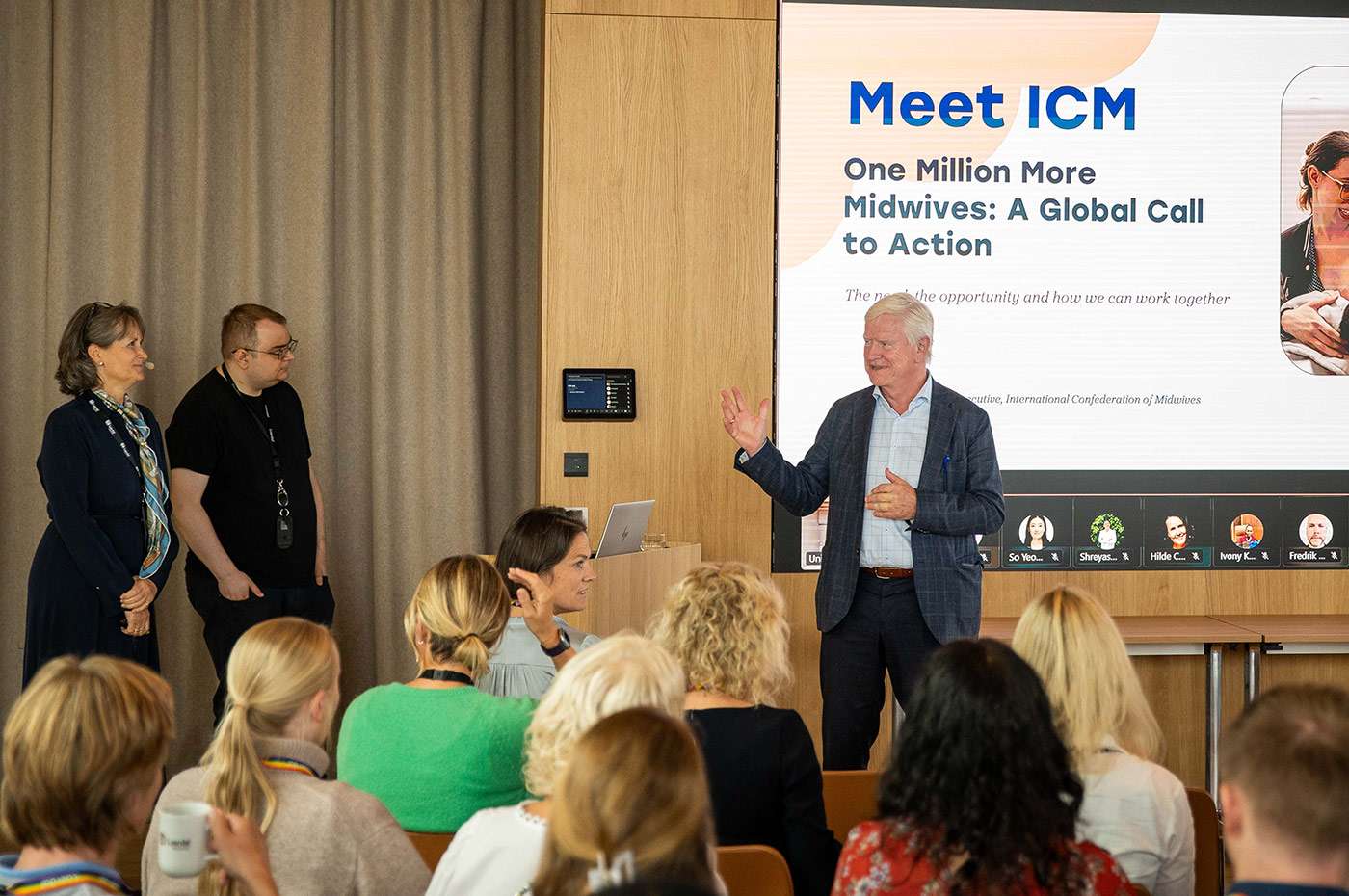
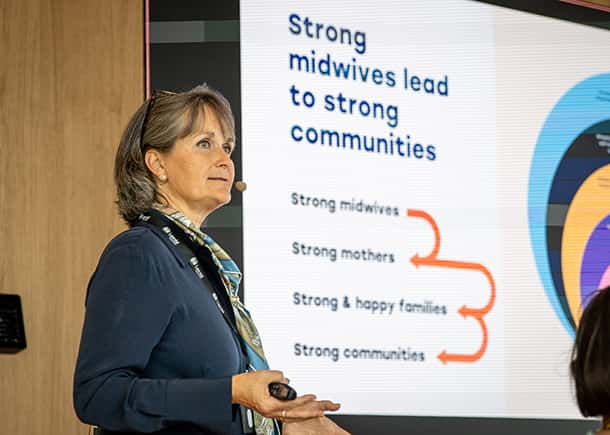
Laerdal Global Health Founder Tore Lærdal introudces ICM's CEO Anna af Ugglas during a presentation with Laerdal Global Health staff in Stavanger, Norway.
Midwives, when educated to international standards and supported to practice to their full scope within functioning health systems, can deliver the majority of essential sexual, reproductive, maternal and newborn health services.
“When we invest in midwives, we are investing directly in better care for women and newborns. When you advocate for more midwives, and well-educated and well-trained midwives, I hope you will shout loud!”
A key focus of the meeting was how to strengthen the connection between education and clinical practice.
Simulation-based education provides an opportunity to bridge this gap. It allows students and health workers to repeatedly practice and refresh essential skills, manage complications, and develop clinical teamwork and decision-making skills in a safe learning environment before applying those skills in real clinical settings.
Anna highlighted ICM’s work to strengthen midwifery education, regulation, leadership, and practice through global standards, essential competencies and curricula for midwifery practice and education. These provide an important foundation for ensuring that midwives enter the workforce with the knowledge, skills, and professional behaviors needed to provide quality care.
The challenge now is how to translate these standards into education and practice – at scale.
This is where stronger collaboration between ICM and LGH has the potential to make a significant and sustainable difference. During the meetings, the teams explored opportunities to expand simulation-based education, peer learning, faculty development, interprofessional education, continuing professional development, and government-level partnerships. 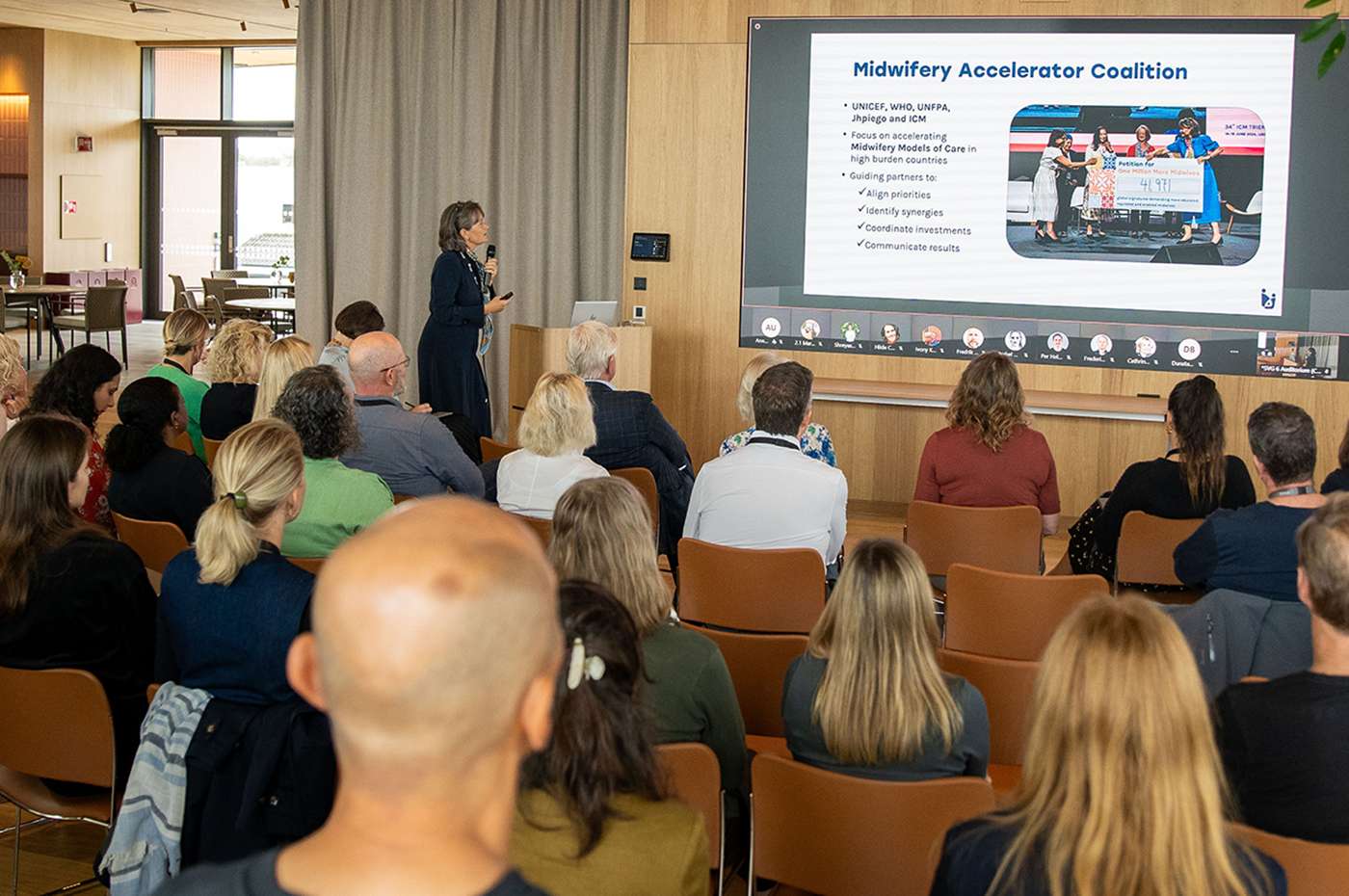
Anna's presentation to Laerdal Global Health staff covered the ICM's strategic aims and campaign to target One Million More Midwives.
For LGH, strengthening the midwifery workforce is central to improving maternal and newborn health outcomes, reflecting evidence and WHO guidance that midwifery models of care that contribute to Laerdal’s goal of helping save one million more lives, every year, by 2030.
The meeting reinforced the importance of partnerships that bring together professional expertise, education, technology and country-level implementation. ICM’s global network and leadership in midwifery, combined with LGH’s experience in simulation, education, and implementation, provide a strong foundation for exploring how practical solutions can reach more educators, students and health workers.
The teams will continue to assess opportunities for joint initiatives, including simulation-based education, continuing professional development, research and country partnerships.
As we’re working to both expand and strengthen the midwifery workforce, the priority is not only to train more midwives, but to ensure they are well-trained, competent, confident and ready to provide quality care.
Simulation can help make that possible and partnerships can help take it to scale.