LGH Highlights from the World Health Assembly 2026
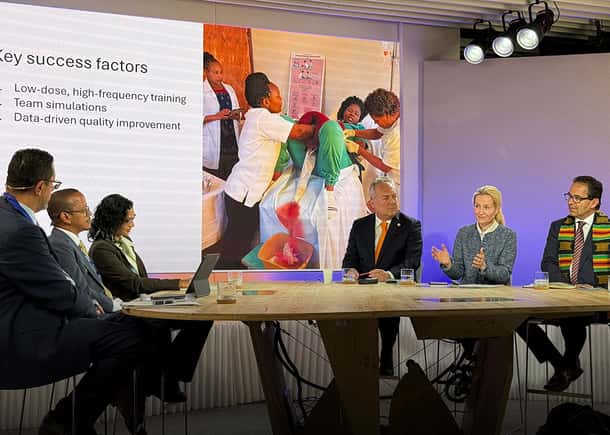
The 79th session of the World Health Organization’s World Health Assembly (WHA79) brought global health leaders, governments, and partners together in Geneva from 18–23 May 2026 to collaborate on solutions to some of the most pressing global health challenges.
During the event, one theme resonated: strengthening health systems requires investment in healthcare capacity, practical training, and proven, evidence-based solutions. Here’s a snapshot of some of the key messages, announcements, and conversations from the events we participated in that we found especially relevant to our work.
For Laerdal Global Health, one of the most exciting experiences at WHA79 was seeing the momentum and enthusiasm for the Safer Births Bundle of Care continue to build.
Co-hosted together with the Global Financing Facility (GFF), Investing in Safer Births: Scaling What Works, highlighted the expansion of SBBC from Tanzania to Nigeria and at least 10 more GFF countries over the next five years.
Speakers shared lessons learned from previous and current implementation efforts while calling for continued collaboration between governments, philanthropies, and private sector partners to help close the funding gap for maternal and newborn health through supporting solutions that are shown to work, like Safer Births.
Some reflections captured:
“How do you scale the SBBC results? The GFF is the perfect mechanism to do this. They’ve spent so much time working with and understanding the needs of the countries”
— Chris Elias, President Global Development, Gates Foundation
“In Ogun state today I can proudly say we’ve introduced SBBC. It’s not a project for us - it’s a commitment to quality and health care” - Dr. Tomi Coker, Commissioner for Health, Ogun State
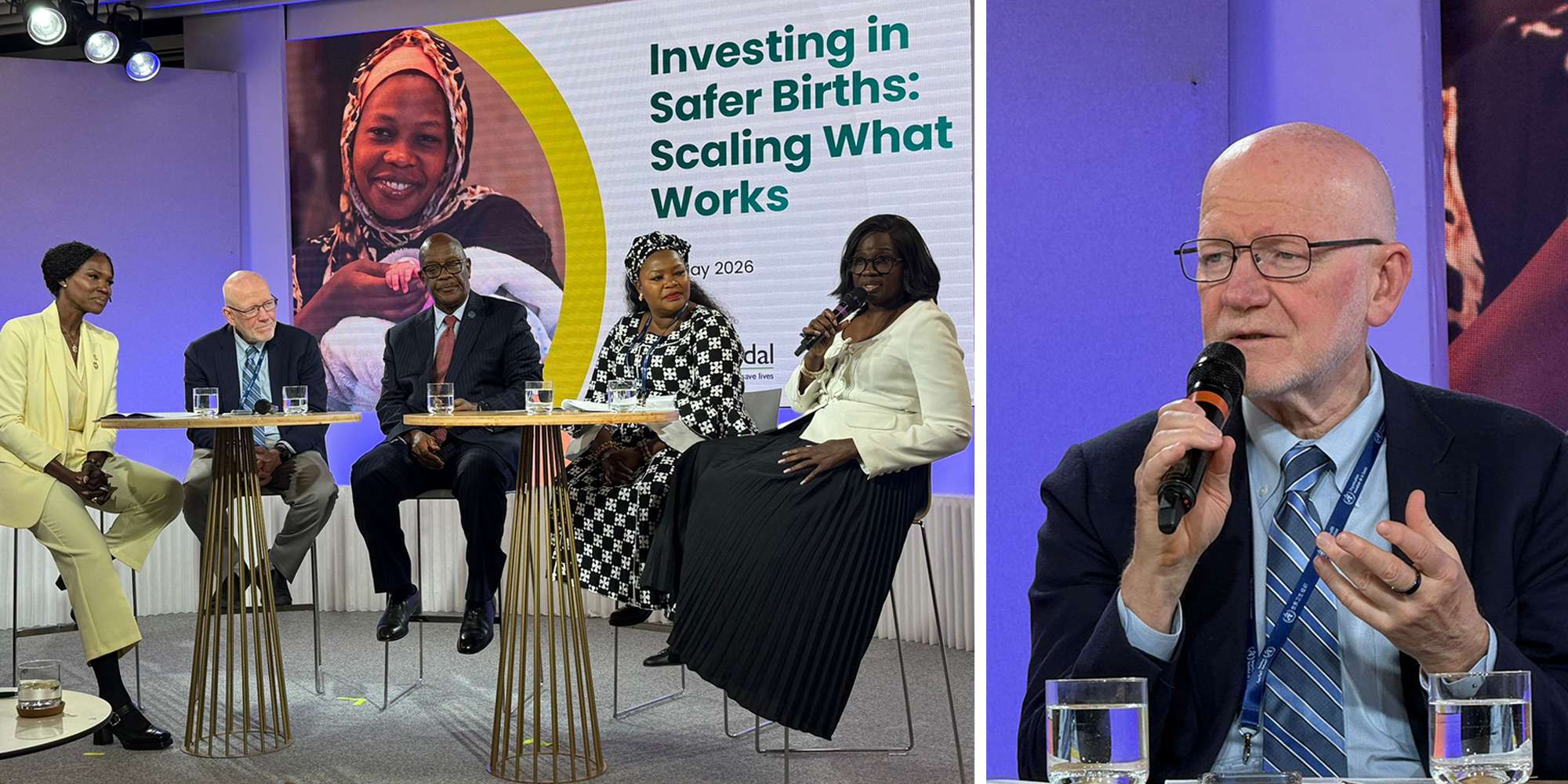
L: Dr. Tomi Coker, Commissioner for Health, Ogun State, Nigeria, speaking during the panel. R: Dr Chris Elias, President Global Development, Gates Foundation
“It’s become apparent that the principles from the Safer Births Bundle of Care is equally applicable to other areas like basic emergency care, critical care and safe anesthesia. We see a tremendous impact potential by learning from each other.” - Ingrid Lærdal, Chief Impact Officer, Laerdal Global Health
“Laerdal Global Health has shown outstanding leadership in this space. You set an example of how the private sector can contribute meaningfully to health.” - Cathrine M. Lofthus, Director General of Health, Norway
At the official WHA79 side event From Global Strategy to Country Impact: Scaling Emergency, Critical and Operative Care, Norad (Norway) announced a USD 3 million commitment to the Lifeline Fund to strengthen lifesaving emergency care in around 1,000 hospitals across five African countries.
The contribution will support the Acute Care Transformation through Basic Emergency Care (ACT x BEC) initiative, coordinated through the Lifeline Fund, a global consortium launched by Laerdal Global Health and the WHO Foundation to scale proven emergency care solutions in low-resource settings.
The announcement reinforced the recognition that well-trained frontline providers of basic emergency care are critical components of resilient health systems, especially in settings where access to timely, quality care can mean the difference between life and death.
"I'm very glad we have Laerdal Global Health here. They have been a productive and positive player in the global health community and have played a positive role in mobilizing resources and forming partnerships. We appreciate being a role model for how private sector can cooperate and we certainly appreciate our long-standing cooperation of the public and private sector to collaborate with countries in Africa.” – Norway State Secretary, Dr. Usman Ahmad Mushtaq
Norway joins a growing group of more than 90 Acute Care Network (ACAN) partners supporting the Lifeline Fund and the ACT x BEC initiative, reflecting a shared recognition that strong emergency care systems are essential. Support from governments, philanthropic organizations, and private sector partners is helping expand proven emergency care training in low-resource settings ensuring more people can access lifesaving care when and where they need it most.
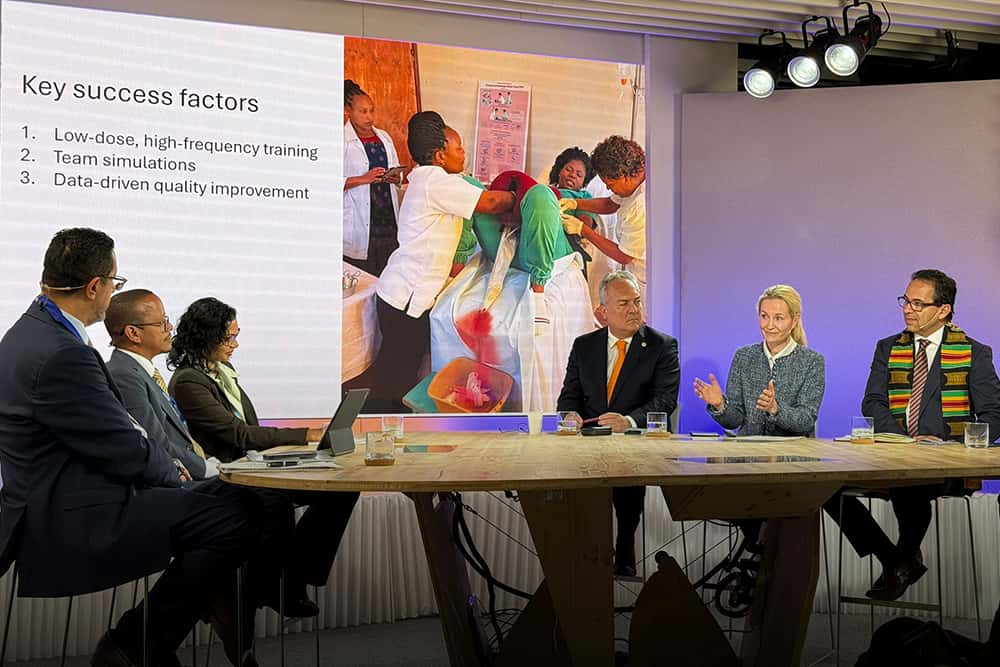 Ingrid Lærdal, Executive Chair of Laerdal Global Health, speaks during the official WHA79 side event From Global Strategy to Country Impact: Scaling Emergency, Critical and Operative Care
Watch the full recording
Read the WHO Foundation announcement
Another important discussion during WHA79 focused on the role of midwives in strengthening maternal and newborn care in humanitarian environments.
Did you know that more than 60% of preventable maternal deaths occur in fragile settings? Hosted by UNFPA, the session explored how midwives are often on the frontlines of crises and how simulation-based training can help them be better trained and prepared to respond. To do this, both pre-service and ongoing in-service training is essential. Panelists emphasized the importance of practical, frequent, low-dose high-frequency (LDHF) training approaches to help healthcare workers maintain lifesaving skills in fragile settings.
Some questions raised:
How can we ensure competency as part of investing in health systems? How can we best prepare healthcare workers and health systems before crises happen?
Here’s what the panelists had to say:
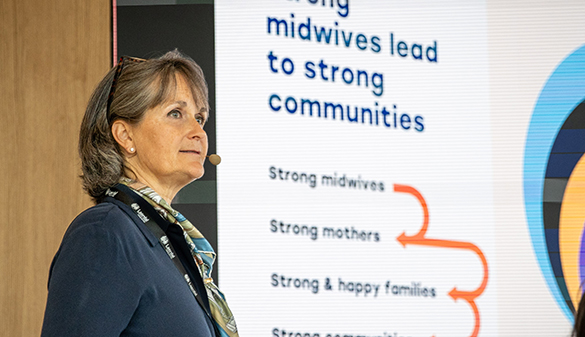
“While frontline workers fight yet another strain of Ebola in the DRC and Uganda, there are women giving birth and newborns being born and midwives doing their best with limited resources to help them.” – Karoline Myklebust Linde, CEO, Laerdal Global Health
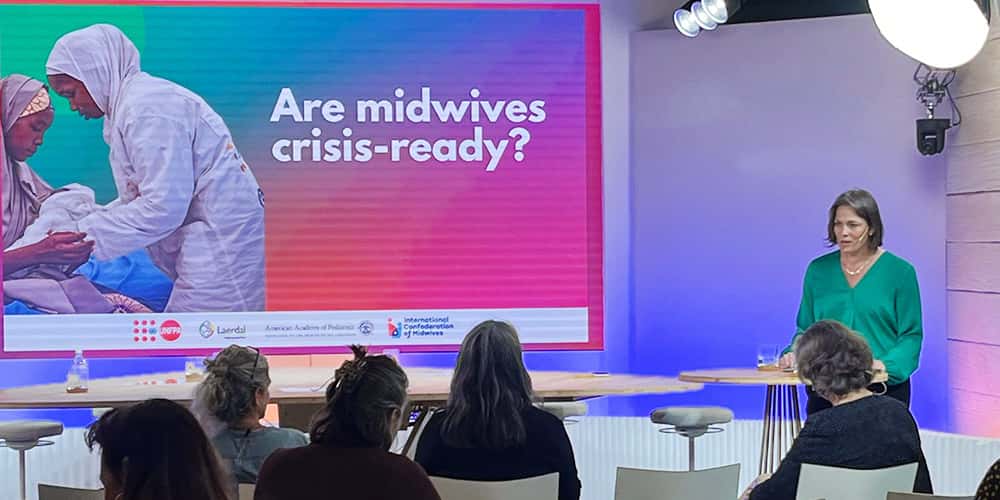 Karoline Myklebust Linde, CEO Laerdal Global Health provided the opening remarks.
“We are currently redefining the way we deliver training to midwives, moving toward LDHF training. It’s very effective everywhere, and particularly in humanitarian settings.” – Julia Bunting, Director Program Division, UNFPA
“SBBC is reducing maternal mortality by 75% in such a short time. It was so exciting! We went to Tanzania, and when we got back, we said this is what we are going to do” – Dr. Dayo Adeyanju, LEAD Maternal And Neonatal Mortality reduction Innovation Initiatives (MAMII), Nigeria
The discussion highlighted the recognition that healthcare workers need ongoing opportunities to practice, build confidence, and strengthen teamwork in realistic clinical scenarios. 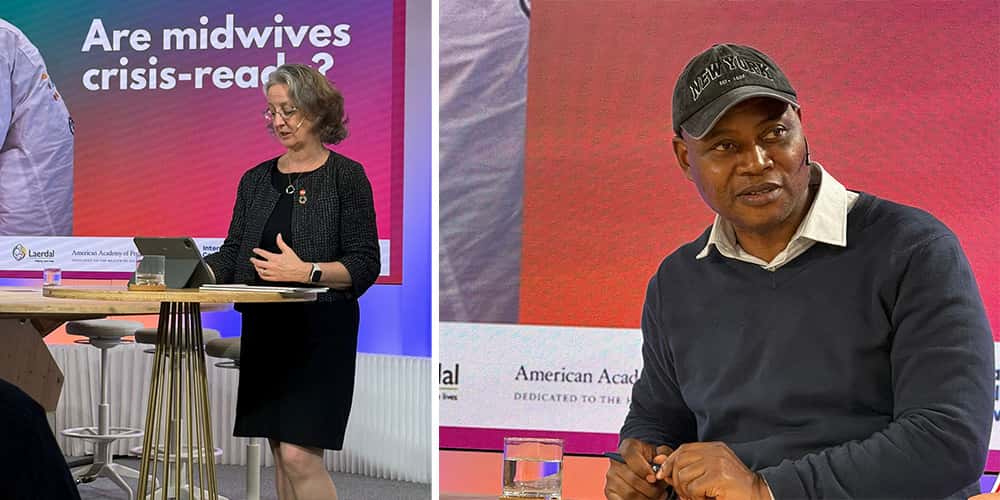 L: Julia Bunting, Director, Programme Division, UNFPA. R: Dr. Dayo, LEAD Maternal And Neonatal Mortality reduction Innovation Initiatives (MAMII), Nigeria
At the G4 Alliance Strategic Leadership for Nurses and Midwives event, speakers emphasized that moving from “ambition to impact” requires investment in practical skills, education, and leadership.
During the event, Laerdal Global Health publicly reaffirmed our commitment to invest in tools and training for students, educators, and healthcare providers. Through programs like the Safer Births Bundle of Care (SBBC), it’s been shown that well-supported nurses and midwives can transform the quality of care and improve outcomes for mothers and newborns.
LGH is committed to scaling this work by strengthening partnerships with professional associations and country leaders to support healthcare workers around the world.
Finally, WHA79 also provided an opportunity to celebrate one of Norway’s most respected global health leaders, Dr. Tore Godal. Dr. Godal received the WHO Honorary Lifetime Achievement Award in recognition of his contribution to advancing global health. He is also a longstanding advocate for maternal and newborn health and a vocal advocate of the Safer Births Bundle of Care. His well-earned recognition is a reminder that lasting progress in global health is driven by long-standing commitment.
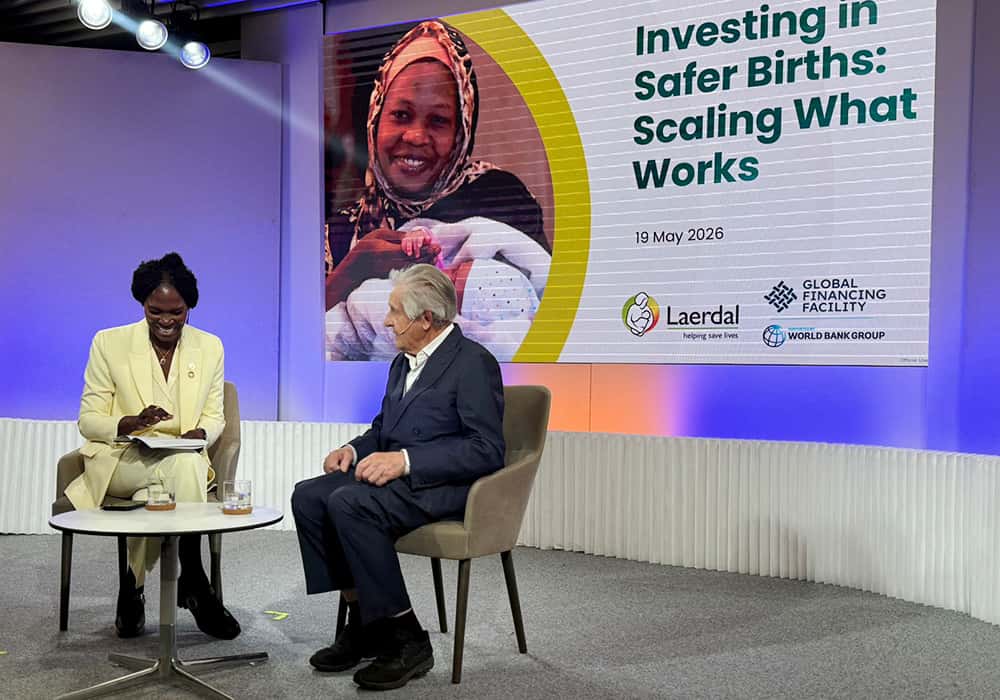
Dr. Tore Godal is honoured with a WHO Lifetime Achievement Award. Here interviewed by Anita Erskine.
This year’s World Health Assembly highlighted both the scale of the challenges facing global health systems and the commitment to finding practical, evidence-based, and scalable solutions. We are proud to work together with governments, organizations, and partners worldwide to help scale solutions that strengthen healthcare systems and get us closer to our goal of helping save one million more lives every year, by 2030.