Siirry sisältöön

Nepal

Nepal in focus

Working together for quality healthcare across the whole country

The Challenge 

In Nepal, basic healthcare services are accessible to nearly 60% of the population, however, there remains a lack of quality healthcare. Healthcare systems are challenged by a shortage of skilled providers, limited training opportunities, and the transference of knowledge and skills from education to clinical practice.  


How we help 

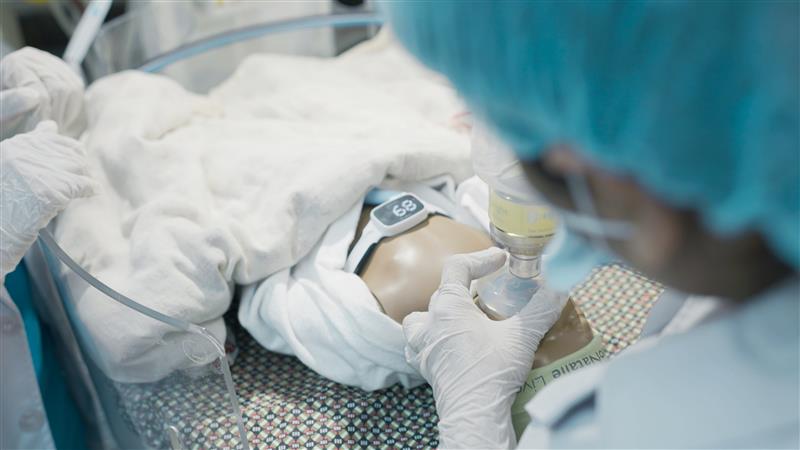
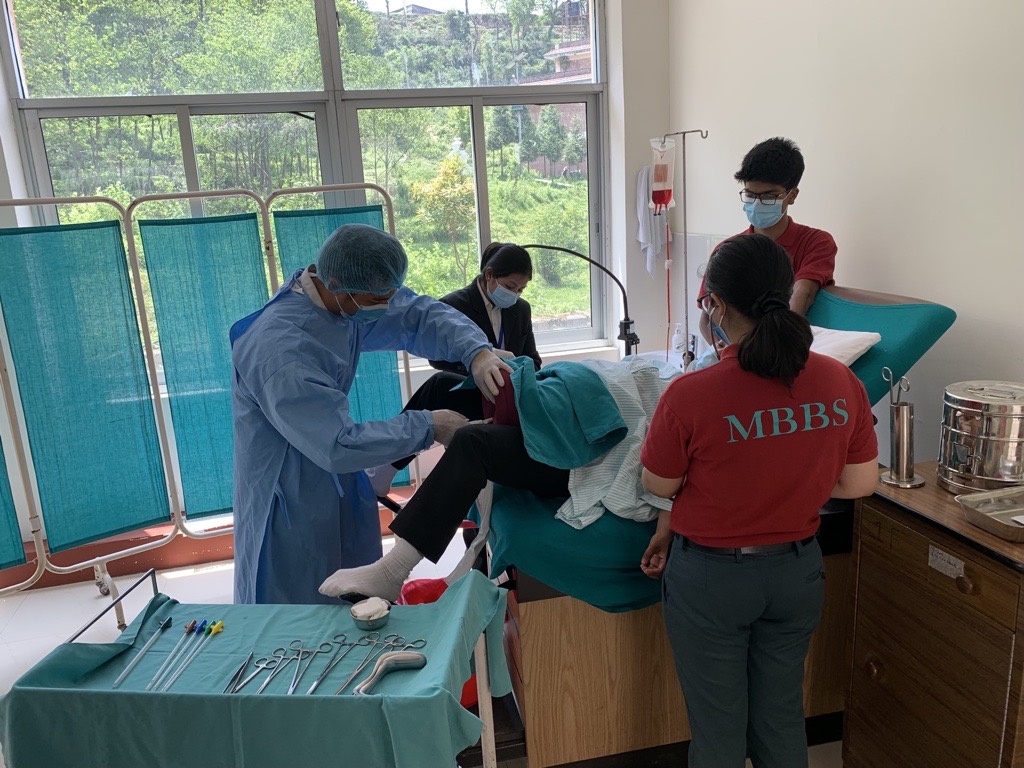
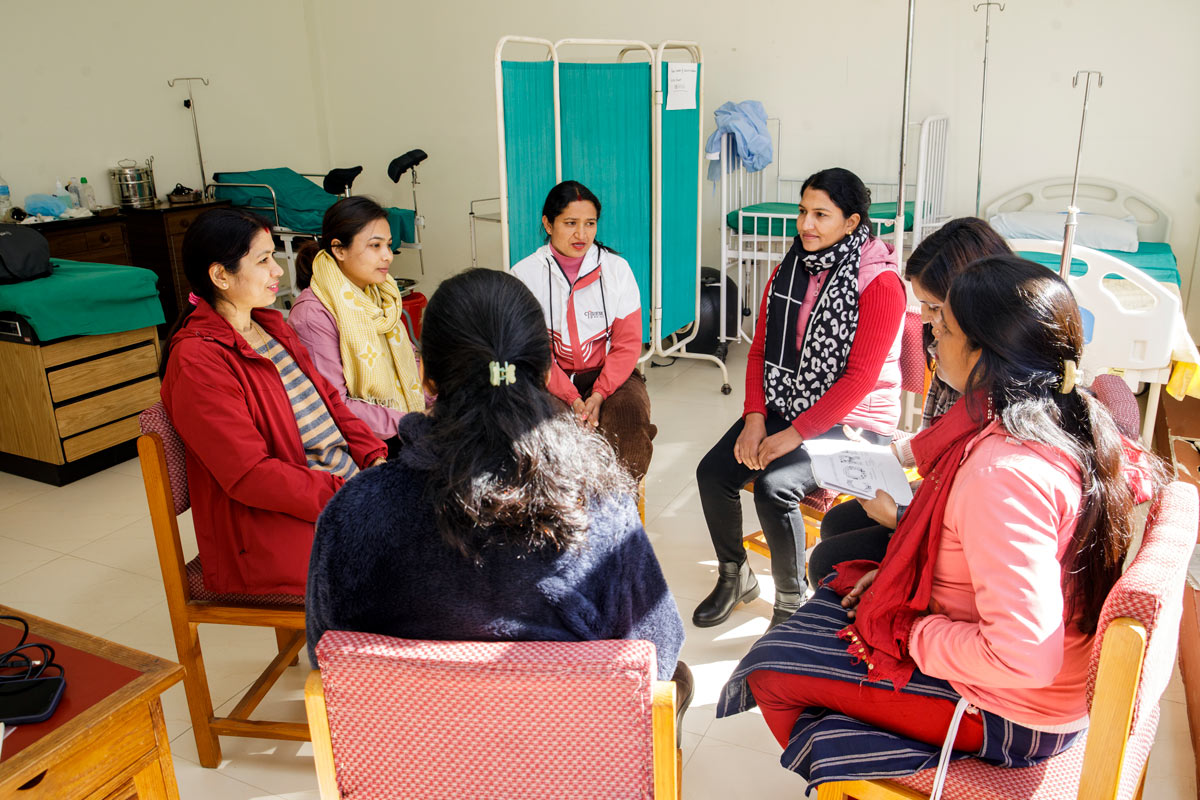
We collaborate with government, partners, professional associations and institutions to develop programs with simulation-based methodology at their core. With a focus on the standardization of competency-based education, we help to develop a supportive infrastructure under which healthcare systems can be strengthened and healthcare workers can become competent, confident and better prepared individually and as a team. 


The impact 

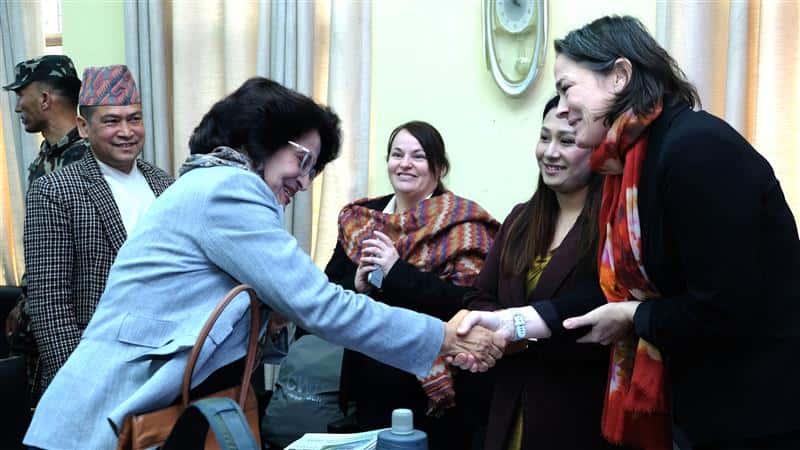
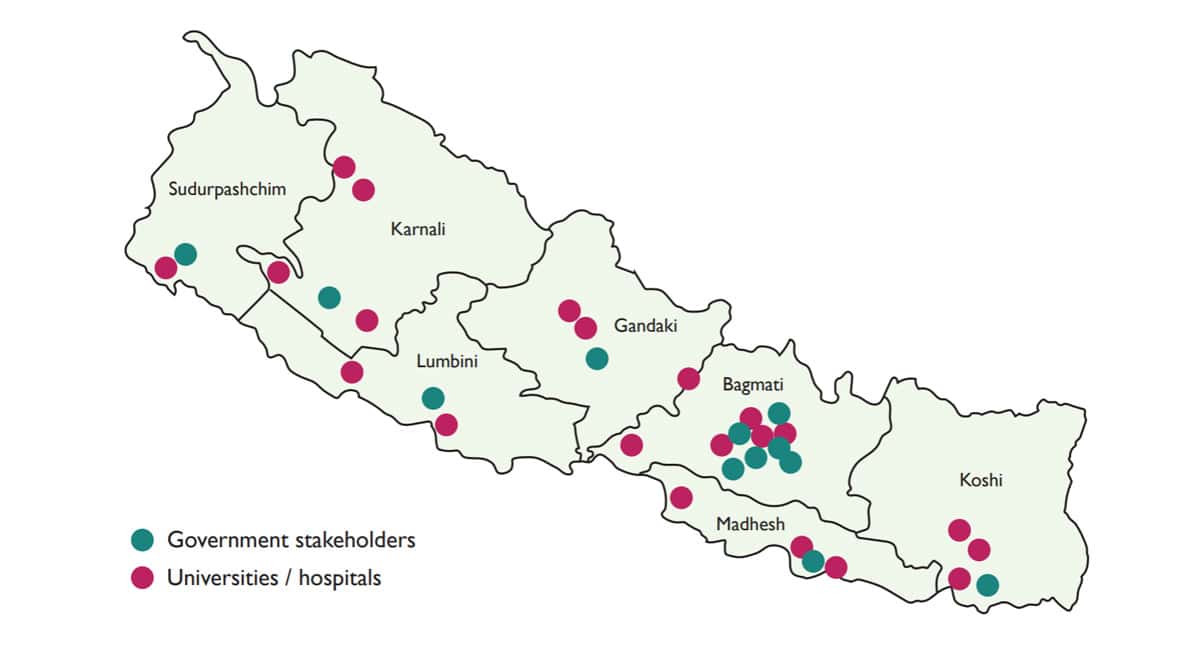
Together with partners, we’ve been involved in numerous programs and initiatives that have been implemented across the length and breadth of the country. To date, these projects have trained more than 12,000 health workers, reaching an estimated 1.3 million lives. We work closely with Ministries of Health and Population, Department of Health Services, external development partners, professional councils, associations and institutions to obtain buy-in and ownership, which is critical to ensure success is scalable and sustainable over time. 

How We Collaborate 

  • Partner with national institutions to integrate and deliver structured, quality simulation-based education programs.
  • Build faculty capacity through Skills and SimBegin to ensure sustainable, high-quality simulation training to maximize learning outcomes.
  • Support in setting up environment to conduct and practice skills and simulation sessions effectively.
  • Equip healthcare providers with practical skills, tools and solutions to effectively provide quality maternal, neonatal and emergency care.
  • Utilize the Circle of Learning framework to design impactful quality improvement programs.

Goal

To strengthen the capacity of healthcare providers and faculty through simulation-based training for maternal and neonatal emergencies. 

Key Partners

  • Ministry of Health and Population
  • Family Welfare Division
  • National Health Training Centre
  • World Health Organization
  • UNICEF
  • UNFPA
  • OHW
  • Kathmandu University School of Medical Sciences / Dhulikhel Hospital
  • National Academy of Medical Sciences
  • Midwifery Society of Nepal
  • Safa Sunaulo Nepal / Latter Day Saint Charities
  • Terre des Hommes Nepal
  • Centre for Medical Simulation
  • SAFER
  • Norway

How We Collaborate

  • Contribute learnings from the Safer Births Bundle of Care approach, including them in the quality improvement processes
  • Undertake needs assessment of participating facilities to understand simulation-training readiness 
  • Integrate a culture of responsive, low-dose, high-frequency skills and simulation sessions
  • Technical support for gathering and utilizing training data and use simulation to inform quality improvement.

Goal

To establish a culture of cost-effective, sustainable, scaleable simulation-based capacity building in health facilities to improve the quality-of-care mothers and newborns receive.

Key Partners

  • Family Welfare Division
  • UNICEF Nepal
  • Simulation Society of Nepal
  • Nepalese Society of OBGYNs
  • Nepal Pediatric Society
  • Pediatric Nurses Association
  • Midwifery Society of Nepal
  • Perinatal Society of Nepal

How We Collaborate

  • Co-develop and integrate simulation-based SRHR competencies into the pre-service medical, nursing and midwifery curricula.
  • Build faculty capacity to deliver competency-based and simulation- 
    based methodologies through structured training, mentorship, and continuous support.
  • Setting up high quality skills and simulation labs to practice the SRHR competencies using Circle of Learning framework.
  • Conduct joint monitoring, evaluation, and operational research to strengthen learning outcomes and sustainability.

Goal

To strengthen pre-service medical, nursing, and midwifery education by integrating simulation-based Sexual and Reproductive Health and Rights (SRHR) competencies into core curricula. 

Key Partners

  • Ministry of Health and Population
  • Medical Education Commission
  • Family Welfare Division
  • National Health Training Centre
  • WHO
  • Nepal BP
  • Koirala Institute of Health Sciences
  • Institute of Medicine
  • Karnali Academy of Health Sciences
  • Kathmandu University School of Medical Sciences
  • National Academy of Medical Sciences
  • Patan Academy of Health Sciences
  • Pokhara University Purbanchal University


Building a Scalable Emergency Care Training System in Nepal 

In remote areas in Nepal, the lack of efficient training tools for healthcare workers is a major challenge for access to capacity building in effective emergency response. 

Read more


2025 Highlights from our focus countries

Working in close partnership with the Government of Nepal, partners, and health institutions, we’re focused on building a sustainable, country-context approach towards the use of simulation for quality to strengthen health systems. 

Read more


Strengthening Maternal and Newborn Care with UNICEF

Laerdal Global Health is collaborating with UNICEF and the Simulation Society of Nepal in an innovative three-year project, running from 2024-2027. 

Read more

To learn more about our projects to strengthen healthcare education in Nepal Download PDF

Connect with us

Meet the Nepal Team

Unisha Shrestha

Country Manager, Nepal

Suchana Thapa

Senior Implementation Specialist, Nepal

Baidehi Upadhyaya

Implementation Specialist, Nepal