Buy One Gift One
For each birthing simulator purchased through Laerdal Medical for use in high-income countries, a second is distributed to support training in low-resource countries.
Mere information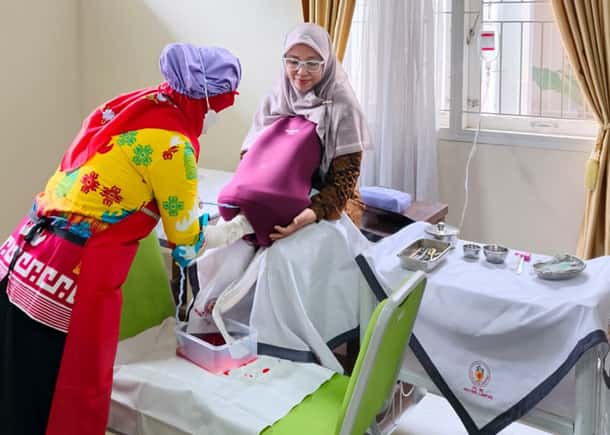
In midwifery, preparation is everything. Yet, teaching how to handle a sudden maternal emergency without the right tools can feel like preparing for a crisis in the dark.
At the Midwifery Department of Universitas Aisyah Pringsewu in Indonesia, Dr. Desi Kumala Sari and her team were facing exactly this challenge. When training students to manage postpartum
hemorrhage, the traditional training tools they used were limited in providing the necessary clinical realism.
While Indonesia has made significant progress in reducing its maternal mortality ratio over recent years, the numbers still remain above the regional average for East Asia and the Pacific. To change this, Dr. Desi and her dedicated team are working to equip local midwives with the skills needed to save lives
Through the Buy One, Gift One program, Indonesia received ten simulators. Buy one, gift one ensures that for every qualifying product purchased from Laerdal Medical in a high-income country, an identical simulator is funded and donated to communities where it can make the greatest impact.
Before receiving MamaNatalie simulators through the Buy One, Gift One program, the primary challenge was a lack of realism.
The previous manikins we used could not visually simulate actual bleeding. This lack of representative visualization made it difficult for midwifery students to accurately envision and evaluate hemorrhage scenarios, as the absence of flowing blood reduced the “real feeling” of the exercise
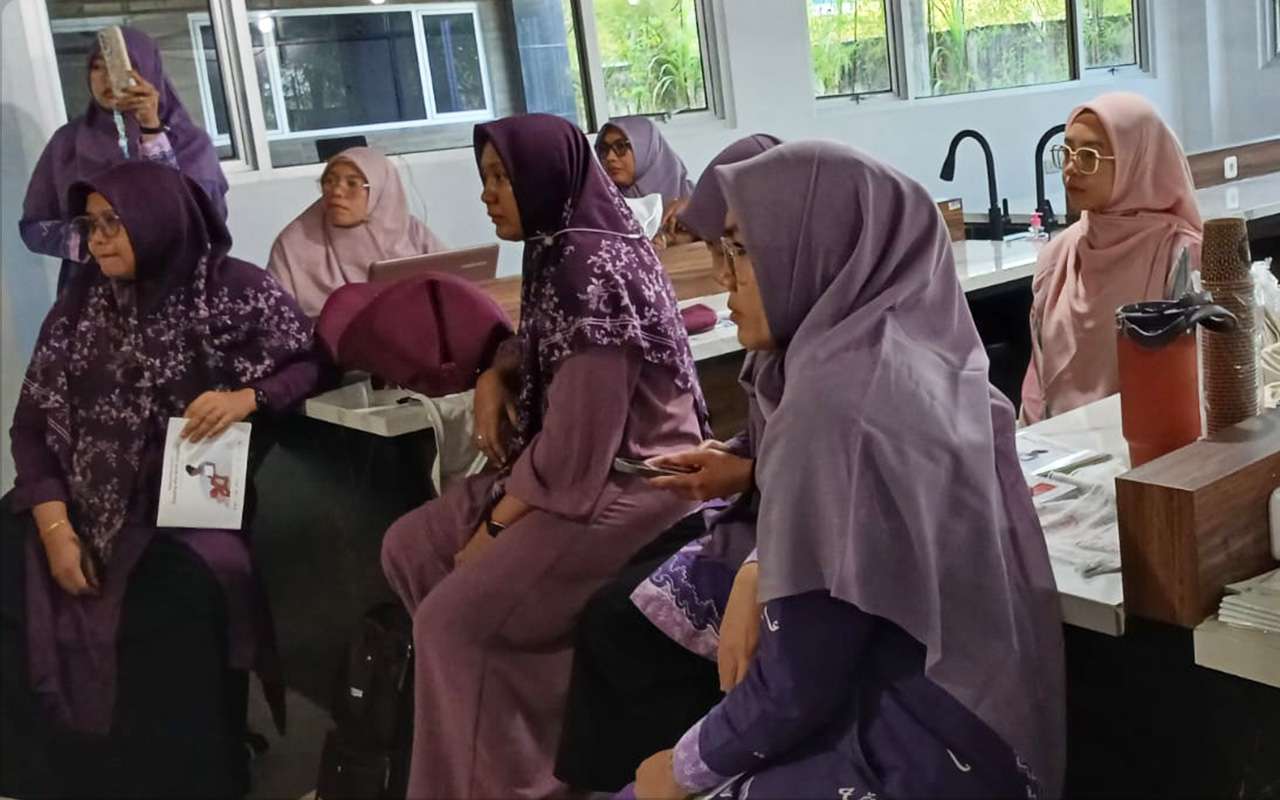
Midwifery students at Universitas Aisyah Pringsewu follow along during a training session. Photo: Universitas Aisyah Pringsewu.
During examinations, the old manikins felt static. They didn’t provide a clear physical feeling needed to feel the difference between a soft, dangerous uterus and a firm, contracted one. Without that realistic feeling, building clinical readiness and genuine confidence was difficult, not just for the students, but for the teachers themselves.
Everything changed when the departmentvintegrated MamaNatalie into their training. After a select group of facilitators learned how to use the simulator, they began integrating it into their classes.
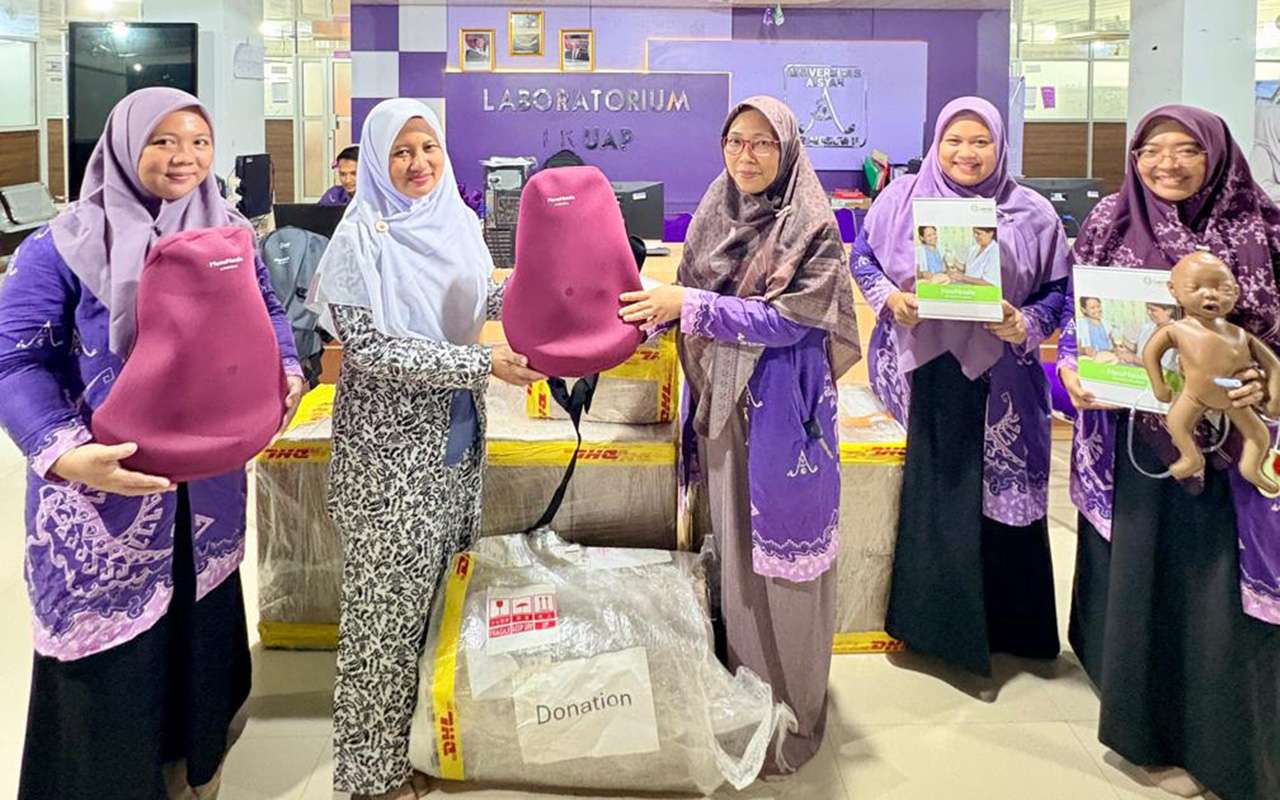
Faculty members at Universitas Aisyah Pringsewu with the newly arrived MamaNatalie simulators, funded through the Buy One, Gift One program. Photo: Universitas Aisyah Pringsewu.
The impact on the 152 trainees was immediate.The MamaNatalie simulators bring realistic anatomy into the classroom. By training with the life-like simulator, the team successfully closed the visualization gap. Trainees could finally experience realistic blood flow and practice vital procedures like bimanual compression of the uterus in a controlled environment.
The realism completely shifted the energy in the classroom. Dr. Desi notes that the highly realistic bleeding simulation significantly increased student engagement and seriousness when learning about maternal emergencies.
It facilitates the training process. Complex emergency steps become easier to demonstrate and grasp
The benefits of the simulator have already extended far beyond the university walls. Several faculty members have taken MamaNatalie out into the field, using it to run emergency simulation sessions for independent practicing midwives at local Community Health Centers.In an environment with limited resources and logistical constraints, MamaNatalie’s portability has proven to be a gamechanger in rural Indonesia.
Instead of transporting multiple fragmented pieces of equipment, facilitators only need to ring one comprehensive MamaNatalie package to teach a wide range of essential midwifery skills
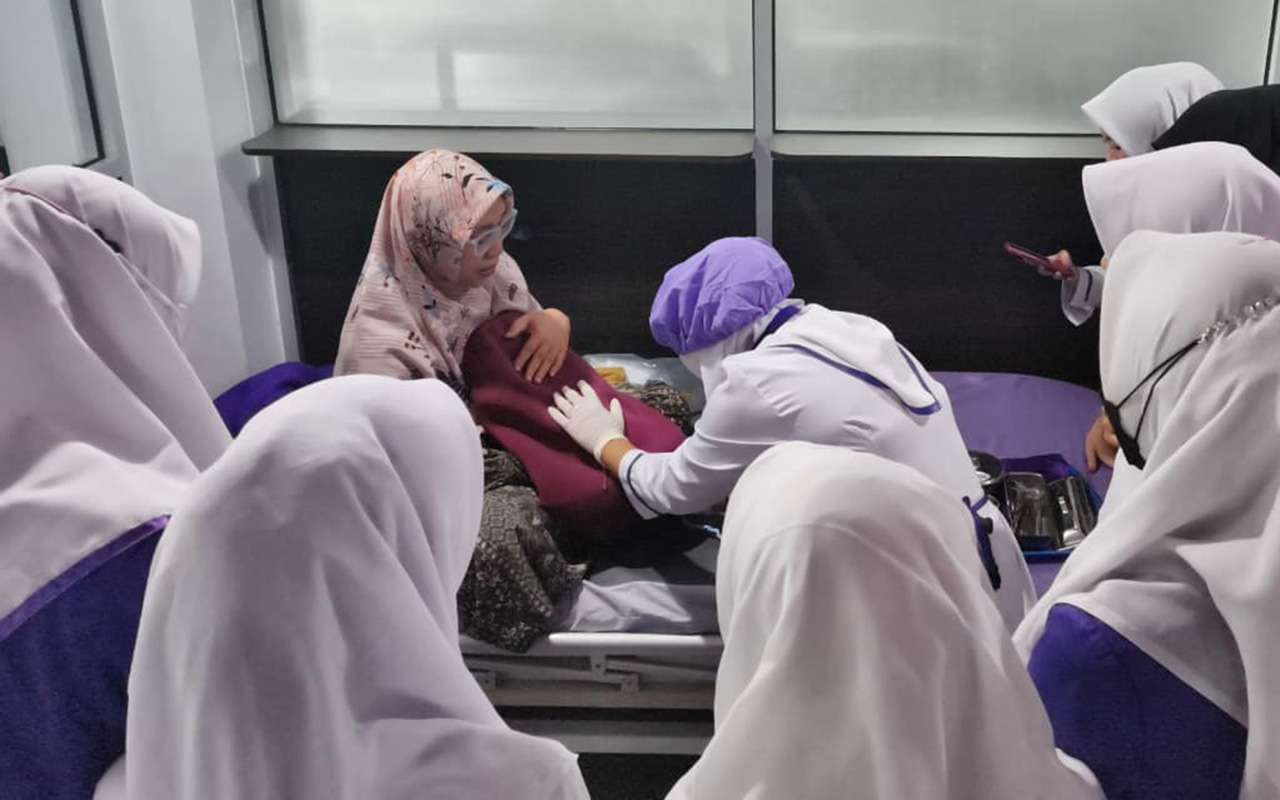
Midwifery students engaging in an effective and realistic simulation session. Photo Universitas Aisyah Pringsewu.
Looking ahead, Dr. Desi and her team plan to collaborate closely with regional and provincial midwifery associations to share these resources, thereby maximizing the benefit for a broader network of midwives.
By expanding this network of well-trained midwives, they can improve Indonesia's health outcomes and help bring the maternal mortality rate down. This handson training is a step toward ensuring more mothers can return home safely with their newborns.
We learned that midwifery education becomes more engaging and effective when supported by good simulation tools